
If you’ve been Googling how to become an RCFE administrator in California… you’ve probably hit a wall of confusing acronyms – ICTP, CDSS, Title 22, LIC forms, and walked away more unsure than when you started.
Becoming a certified RCFE administrator in California is a defined, four-step process. It’s not a degree, it isn’t years of school, and this surprises people — it doesn’t require a nursing background. Here’s exactly what it takes, in the right order.
First, Know the Difference: Certification vs. License
This one trips up almost everyone, so clear it up before you spend a dollar.
A certification applies to a person — you, the administrator. A license applies to a building — the facility itself. You get certified. The facility gets licensed. Two separate things, two separate processes.
If your goal is to run a Residential Care Facility for the Elderly (Assisted Living or Board & Care) — whether you own it or you’re hired to manage one — you need the administrator certification. That’s what this guide covers. Opening your own licensed facility is a longer, separate road that can take many months; becoming a certified administrator is much faster.
Every RCFE in California must have a certified administrator, and the state won’t allow a facility to run without one. That’s exactly why the certification carries real career value — it’s a legal requirement, not a résumé nicety.
Step 1: Confirm You Qualify
Under Title 22 of the California Code of Regulations, the baseline requirements to become a certified RCFE administrator are refreshingly simple:
- You must be at least 21 years old
- You must have a high school diploma or GED (Diplomas earned outside the U.S. are accepted)
- You must clear a background check
That’s it for the standard certificate. No nursing license. No college degree. No years of prior experience required just to get certified.
One caveat worth knowing early: larger facilities carry added experience or education requirements on top of the certification. Facilities of 16–49 residents expect about a year of relevant experience or 15 college/CE units; 50-plus residents, three years of experience or 60 units. For smaller board-and-care homes of six or fewer residents — where most new administrators begin — the baseline requirements are all you need. So the entry bar is genuinely low.
Step 2: Complete the 80-Hour Initial Certification Training

This is the core requirement. California mandates an 80-hour Initial Certification Training Program (ICTP) that a CDSS-approved vendor delivers. The 80 hours break down as:
- 60 hours of live, instructor-led training (commonly delivered across roughly six full days via Zoom)
- 20 hours of self-paced online study you complete on your own schedule
The curriculum covers the state’s required “Core of Knowledge” — laws and regulations, business operations, resident care and rights, medication management, dementia and Alzheimer’s care, and more. Private vendors typically price the full course somewhere in the $500–$700 range.
The live-plus-self-paced format is deliberately built for people who are already working or caregiving. You are not quitting your job to do this.
That’s exactly how our 80-Hour Initial RCFE Administrator Certification course is built — the full state-required 80 hours delivered through live Zoom cohorts plus self-paced online study, taught to get you genuinely exam-ready rather than just handing you a certificate. Cohorts run on a set schedule, so you can pick the start date that fits your life.
[Register for the next cohort →]
When you finish, you receive a Certificate of Completion — the document that lets you sit for the state exam.
Step 3: Pass the State Exam
Here’s where the nerves usually kick in, so let’s demystify it.
The California Department of Social Services (CDSS) administers the exam — not your training vendor.
The key facts:
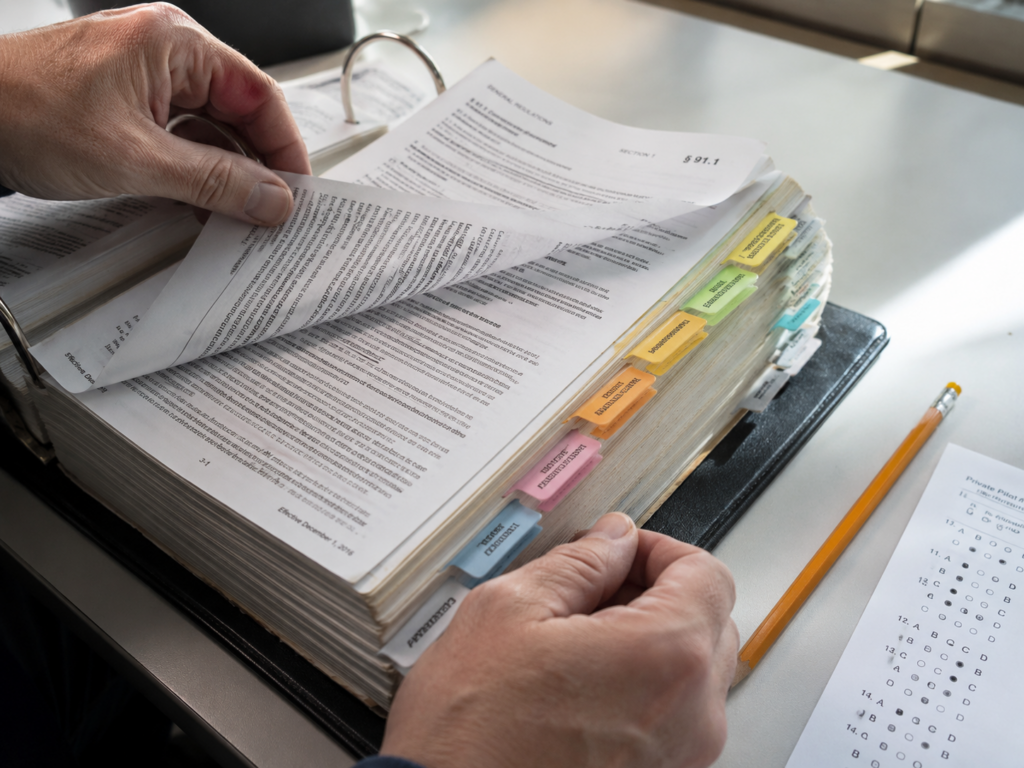
- It’s 100 questions, roughly a two-hour exam
- You need 70% or higher to pass
- It’s open book — you may reference your Title 22 and Health & Safety Code materials during the test
- You must take it within 60 days of finishing your 80 hour course
- You get three attempts
- The exam fee is $100, paid to “CDSS-ACB”
Read that again: it’s an open book test. A large part of the exam is knowing how to find the right regulation quickly, not reciting it from memory. Strong training programs drill you on exactly that skill — which is why your choice of course affects your pass rate, not just whether you get the certificate.
One caution: burn through all three attempts without passing and you’ll have to retake the full 80-hour course. That’s uncommon with solid preparation, but it’s the reason you don’t want to walk in cold.
Step 4: Apply for Your Certificate

Pass the exam and you’re in the home stretch. Within 30 days of passing, you submit your application to CDSS. A complete application includes:
- Your Certificate of Completion from the 80-hour course
- Live Scan fingerprint clearance (a criminal background check)
- The application form plus the initial certification fee — currently around $140, per the CDSS fee schedule
Once your background check clears and CDSS processes everything, CDSS mails your certificate. At that point you are officially a certified RCFE administrator in California.
How Long Does It Take to Become an RCFE Administrator?
Realistically, from the day you start your course to holding your certificate: a few weeks to a couple of months. The 80-hour course can be done in as little as one to two weeks depending on the schedule; the exam has to happen within 60 days; the application within 30 days of passing; and the background-check clearance adds some processing time at the end.
Compare that to a traditional degree and the speed is the whole point. This is one of the fastest routes into a salaried leadership role in healthcare that California offers.
A Realistic Example
Picture a caregiver — a composite of the people who actually take this path — who’s spent six years in direct care and is ready to lead instead of clock hourly shifts. She’s 38, has a high school diploma, and assumed that not having a nursing degree disqualified her. It does NOT.
She enrolls in the 80-hour course, completes the 20 online hours over two weeks of evenings, does the live sessions across six Zoom days, and sits for the state exam three weeks later — passing on her first attempt because her program trained her to navigate Title 22 fast. She submits her application, clears Live Scan, and roughly six weeks after she started, her certificate arrives. She’s now eligible for administrator roles paying well above what she earned as a caregiver.
Nothing about that path required going back to school. It required one focused course, one exam, and following the steps in order.
Your Next Step
If this is the direction you’re leaning, get the full picture before you commit. Our free RCFE Career Guide lays out every step above — plus the exam, the fees, the licensing timeline, and what your first administrator role actually looks like — in one clear document.
[Download the free RCFE Career Guide →]
It’s the simplest way to see the whole road ahead of you before you take the first step.